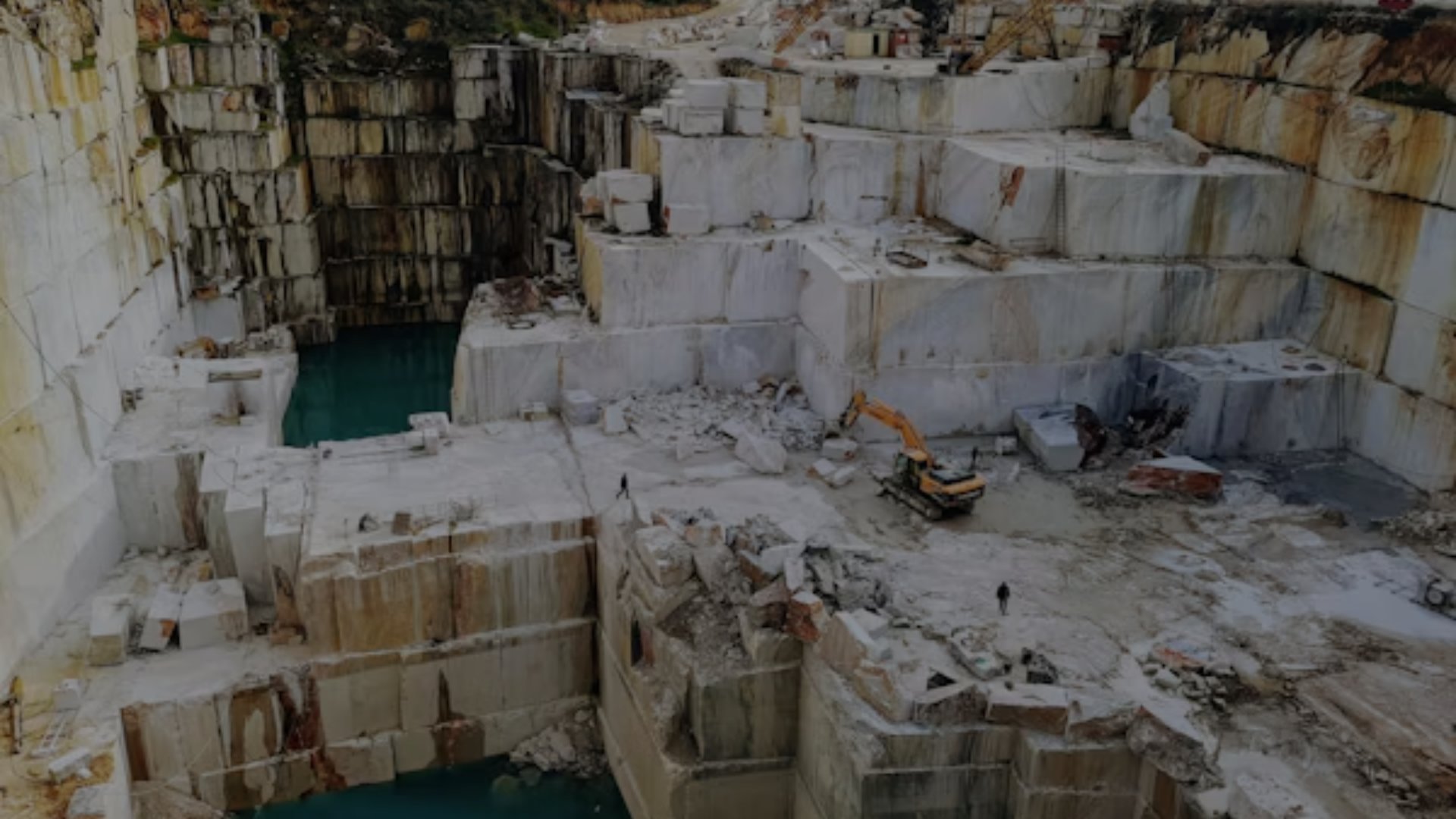
Every load of sand, gravel or crushed stone that leaves a quarry is a construction product. Under EU rules it has to come with a CE marking and a Declaration of Performance (DoP). For bagged goods, that's a label on the bag. A truck full of loose aggregate has nowhere to put a label, so the documents travel separately: on paper with the delivery, or by email to the buyer.
At a few loads a day this is manageable. At a few hundred, it becomes a full-time job. We automate CE marking documents: CE labels and DoPs are generated from data you already record at the weighbridge and sent to each customer, so nobody has to fill in a Word file by hand.
CE marking requirements for aggregates
Construction products covered by a harmonized European standard need a CE marking and a declaration of their performance. For aggregates, the main standards are:
- EN 12620, aggregates for concrete;
- EN 13043, aggregates for bituminous mixtures and surface treatments (asphalt);
- EN 13242, aggregates for unbound and hydraulically bound materials used in civil engineering and road construction.
When the nature of the product makes it impossible to mark the product itself, the CE marking goes on the accompanying documents instead. That is the case for anything shipped in bulk.
A CE label for aggregates has two parts:
- the fixed part names the product and the standard and lists the declared performance (grading, fines content, resistance to fragmentation and so on). It changes rarely, usually after new laboratory tests;
- the variable part lists the buyer, quantity, batch, date, registration number and the delivery notes it covers. It changes with every shipment.
The new Construction Products Regulation (EU) 2024/3110
The rules are changing too. The new Construction Products Regulation (EU) 2024/3110 has applied since 8 January 2026. As product families move to new standards, the Declaration of Performance becomes a combined Declaration of Performance and Conformity, and a Digital Product Passport will follow. Part of the information next to the CE marking can then be replaced by a QR code or link to the declaration published online. If your documents are generated from data, adapting to both changes means editing a template, not hundreds of files.
Why manual Declarations of Performance become a bottleneck
Imagine a quarry operator with two sites. On a normal day, 100-300 trucks are loaded. The company sells around 50 products under several standards, which adds up to 100-200 document templates. Every delivery needs its quality documents sent to the right person at the customer.
The usual setup is a folder of Word templates and a script, or a person, that fills them in. In practice:
- templates break when someone changes a font or moves a table;
- there is no record of what was sent, to whom and when;
- documents go to a single email address, even when the customer needs them elsewhere;
- when something goes wrong, finding the cause can take a week.
Meanwhile the Declaration of Performance is often still filled in by hand, although it is the signed document where an error matters most.
How CE marking and DoP automation works
- We take trips, buyers, products, quantities and customer contacts from your weighbridge or dispatch software, through its API or, if it has none, through its interface.
- The fixed part of each label and declaration is stored as a structured template, not a Word file, so a changed font can't break it. The variable part is filled in automatically: batch numbers follow the production week, and registration numbers run in sequence from the start of the year.
- Each customer gets one PDF for the agreed period, listing every delivery note it covers, instead of a separate email for every truck.
- The PDF goes to the right contacts, and a copy is saved in your document system, for example SharePoint. Every send is logged, so you can check what a customer received and when.
- When new test results come in, AI reads the laboratory protocol and proposes an updated performance table. A person approves it before it's used.
The quality team stops preparing documents and only handles the exceptions.
Who CE marking automation is for
Quarries and aggregate producers, concrete and asphalt plants, and any manufacturer of construction materials that ships in bulk and has to document every delivery.
FAQ: CE marking and Declarations of Performance
Do sand and gravel need a CE marking?
Yes, when the product is covered by a harmonized standard, such as EN 12620 (aggregates for concrete), EN 13043 (aggregates for asphalt) or EN 13242 (aggregates for civil engineering and road construction). The manufacturer then has to draw up a Declaration of Performance and mark the product with the CE marking.
Where does the CE marking go if the load isn't packaged?
If the nature of the product makes it impossible to put the marking on the product or its packaging, the Construction Products Regulation allows it on the accompanying documents. For bulk loads, that is the usual solution.
What is the difference between a CE label and a Declaration of Performance?
The CE label is a short summary that accompanies the product. The Declaration of Performance is the full, signed document in which the manufacturer takes responsibility for the declared performance.
Can a Declaration of Performance be sent by email?
Yes. A copy can be supplied on paper or electronically, and a paper copy is only needed if the recipient asks for one. The declaration can also be published on a website, under conditions set by the European Commission. It must be in the language of the country where the product is sold.
What does the new Construction Products Regulation (EU) 2024/3110 change?
It has applied since 8 January 2026. As product families move to new standards, the DoP becomes a Declaration of Performance and Conformity, and a Digital Product Passport will follow. Part of the information next to the CE marking can then be replaced by a QR code or link to the declaration published online.
Can one document cover several deliveries?
Yes. When a batch of the same product goes to a single customer, one copy of the DoP can accompany it. That means each customer can receive one consolidated document for the agreed period, listing all delivery notes.
Which weighbridge and dispatch systems does it work with?
Weighbridge and dispatch software, ERP systems, email and document storage such as SharePoint. If a system has no API, we can still read data from its interface.