AI expert and consultant Aistis Raudys
CEO
Building artificial intelligence solutions is no longer a technical experiment or a way to showcase innovation. Organizations increasingly look for systems that work in real conditions: reliable, interpretable, and capable of creating measurable business value.
"Artificial intelligence becomes valuable only when it can work outside ideal conditions, with messy or incomplete data that is typical of real business," says Aistis Raudys, CEO of AAI Labs.
This view reflects a broader shift. An AI consultant today must be able not only to build models, but also to understand the full logic of an organization: data structures, processes, risks, and the ability to scale solutions. 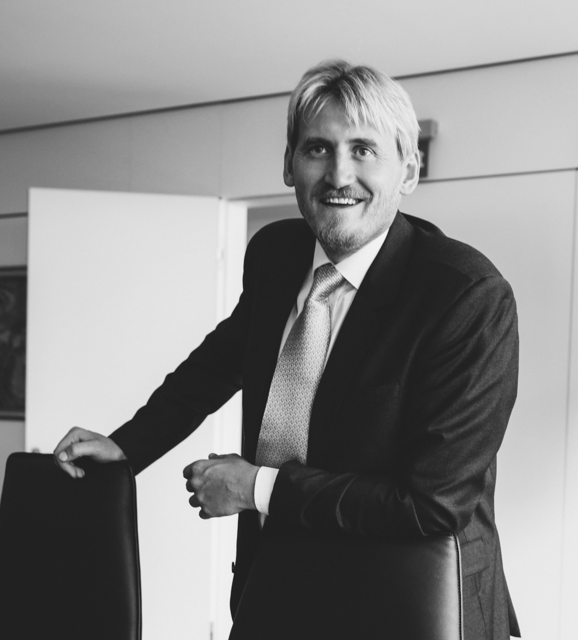
An AI expert connecting science and business practice
Dr. Aistis Raudys is one of the specialists who treats artificial intelligence not as a technology in itself, but as a systematic tool for solving business problems. His work covers the full cycle: from data analysis and model development to integration into organizational processes.
Unlike many projects where AI implementation stops at prototypes, the focus here is long-term operation: solutions must be stable, predictable, and controllable.
"The model is not the goal. The goal is a solution that works, can be explained, and creates value over time," says Raudys.
This approach is grounded in a strong academic foundation. A doctoral degree from Vilnius University, specialization in multivariate data analysis, and many years of teaching experience allow him to develop solutions that are not only functional, but also mathematically sound.
From theory to real systems
As the leader of the AAI Labs team, Raudys works on projects where artificial intelligence is applied in practice: from speech recognition to process automation and transport optimization.
The key distinction is that there is no "technology for technology's sake". Every solution starts with a question: what specific problem does it solve, and what value will it create?
This is especially important in organizations where:
- data is not ideal,
- processes are complex and interconnected,
- mistakes carry real financial cost.
In these situations, AI solutions must be not only accurate, but also resilient and easy to integrate into existing systems.
How AI solves real manufacturing problems
This approach was clear in work with DIAB, an international composite materials manufacturing company. Its design and production chain repeatedly faced errors: inaccurate measurements, mismatches between 2D and 3D models, and CNC file issues.
These errors are not just technical. They directly cause:
- material waste;
- production delays;
- additional costs.
Instead of treating symptoms, the team chose a systematic path: analyzing the data itself and the structure of recurring errors.
"The greatest value appears when you understand why errors repeat, not only when you fix them," Raudys explains.
The AAI Labs team performed a detailed analysis of DXF and CNC files, identified recurring mismatches, and developed algorithms that can detect these errors automatically.
The solution used several important technical principles:
- polygon analysis to precisely evaluate compatibility between parts;
- graph-theory-based optimization methods;
- Monte Carlo algorithms for more efficient cutting plans;
- geometric transformations for complex cases, such as rotated or slightly different parts.
Additional AI models allow the system to learn from new data and continuously improve error detection accuracy.
The result is more than an automated CAD review process: it reduces manual work, improves precision, and enables more efficient material use.
Systems that work under pressure
This type of work is also connected to Raudys's broader experience. His background in algorithmic trading, including managing an automated fund, adds another dimension: the ability to build systems that operate in highly dynamic environments.
In financial markets, decision accuracy is measured not in theory, but by real-time results. This experience carries over into other projects where the critical factors are:
- fast response;
- risk management;
- model stability.
Work with international banks such as Deutsche Bank and BNP Paribas also strengthened his understanding of how to build solutions that meet high reliability standards. 
Expertise based on data, not opinion
Raudys's work is not limited to business projects. He is the author of more than 48 scientific publications and is active in artificial intelligence and financial engineering research. This combination of science and practice helps maintain a critical view of AI solutions.
"Too many AI projects fail today not because the technology is missing, but because the problem is misunderstood," he says.
AAI Labs solutions focus not on short-term effect, but on long-term value: transparency, interpretability, and the ability to scale as an organization grows.
Artificial intelligence is a strategic tool, not an experiment
Today, more organizations understand that artificial intelligence is not a one-off project. It is an ongoing process that requires strategy, the right data, and the ability to integrate solutions into daily operations. This is why the role of an AI consultant is becoming increasingly important. It connects technology, business logic, and long-term vision.
FAQ
Who is Aistis Raudys in the context of AI?
Aistis Raudys is an artificial intelligence expert who helps businesses understand how to apply AI solutions in practice and avoid costly implementation mistakes.
What AI solutions does Aistis Raudys most often recommend?
Common examples include customer support automation, data analysis tools, sales forecasting, and content generation systems.
When should a business contact an AI expert instead of a programmer?
When it is not yet clear which problem should be solved. An AI expert helps identify the real business problem, while a programmer usually implements a defined solution.
Are AI solutions suitable for small businesses?
Yes. Even a small business can use AI for customer service, marketing, or process optimization, often with a modest initial investment.
How much does AI implementation cost?
The cost depends heavily on complexity: from a few hundred euros for simple solutions to thousands or tens of thousands for larger projects.
What are the most common mistakes in AI implementation?
The biggest mistakes are a lack of clear strategy, choosing the wrong problem, and expecting too much too soon.
Can AI replace employees?
More often, AI complements employees instead of replacing them. It automates routine work so people can focus on more important tasks.